Jan
Safeguarding
What is a Vulnerable Child Register and what should it look like in my setting?
In this blog, SFE Education Adviser Claire Steele, details the key information that a Vulnerable Child Register should hold for schools and why it is so important…
At Services For Education we visit many schools to carry out safeguarding audits, and one of the key documents we discuss is the school’s Vulnerable Child Register (VCR – often also called a “Vulnerable Children Register” or “Vulnerable Children List”) but this can look different in different settings.
‘Vulnerable children’ is a term we use to describe all children who, for a variety of reasons, are more likely to be at risk of suffering significant harm than other children. It is therefore important that as a school we identify these children and keep a close eye on their wellbeing.
The Children Act 1989 and 2004 establish the legal duty for all relevant agencies to promote the welfare of children and ensure their protection. The core principle is that a child’s welfare is the paramount consideration in all decisions. Whilst there is no specific requirement in Keeping Children Safe in Education (KCSIE) to hold a Vulnerable Child Register, KCSIE does require schools to have a robust and well-documented approach to identifying and safeguarding vulnerable children.
Creating a register of children identified as vulnerable is seen as good practice because it allows for a single point of reference to be used as a springboard for ongoing conversations around the child’s wellbeing. It must be a ‘dynamic document’ continually evolving as children’s situations change.
To accompany this blog, I have also created a Vulnerable Child Register Template that you can purchase here. It’s editable so you can adapt it to your own school’s needs, but covers everything a VCR should contain. This is something I really wish someone had given me when I first took on the Lead DSL role!
Which children should be classed as ‘Vulnerable’?
All children who have specific situations that would make them potentially vulnerable to harm should be on the “list.” This could include:
- Children currently on Child In Need or Child Protection plans, as well as, those who have been on them in the past.
- Looked after or previously looked after children (LAC).
- Children whose family are receiving Early Help, supported either internally by school or externally.
- Young carers.
- The school’s SEND register. In some schools this list is incorporated within the main VCR, whilst in others where the SEND register is large, it may be held separately.
You could then add any other children with specific vulnerabilities known to the school.
What should the list look like?
There is no specific template for what a good VCR should look like – but it is important that your register holds the following information about the children contained on it.
- Basics like full name, date of birth, familial links (as often siblings have different family names and are not necessarily known to be related).
- The level of support being offered currently, details of any social workers or outside agencies involved with the family.
- A record of any referrals made e.g. to school nurse, mental health agencies etc.
- Any important family history and individual support strategies.
How do we use this in practice?
The most effective way to use your Vulnerable Child List is to make it a standing item on your Safeguarding team and SLT weekly meeting. Bring to the forefront of your conversation these children and share any concerns, issues or risks that have arisen for them over the previous week, using your VCR to triangulate them.
It is also a good place to talk about any adaptations or special considerations that need to be made to existing policies and practices to ensure these already vulnerable children have the best chance of success in school.
Ensuring strong safeguarding practice is embedded in your school through up-to-date policies that reflect your setting and its contextualised risks, recording all concerns, and ensuring staff are trained to recognise and act on potential risks will incorporate the active use of your VCR to monitor vulnerable children.
The focus is on a comprehensive system for identifying, recording, and responding to any child at risk of significant harm.
With the new Ofsted framework carrying an increased scrutiny of ‘inclusion’ in its widest usage, and taking a sample child and tracing the school experience through their eyes, the importance of having all this information for our most vulnerable children together and at hand is paramount.
The list is not just a record of incidents which have occurred, it also documents strategies that can help, and the information and strategies contained in the VCR can be flagged on your Management Information System (MIS) if needed.
Who should have access to the Vulnerable Children Register?
Confidentiality is important, and it is recommended that this document is created and maintained by the Designated Safeguarding Lead working with the SENCO and wider SLT. Access to this document should be restricted to those people who need to know the specifics of children’s cases.
This might include classroom staff and pastoral staff to enable them to put in place strategies to keep the child safe. It should be a well-used, working document that leaders in school use.
If any of this has got you thinking and you’d like more support or advice, our expert RSHE and Safeguarding Advisers can help. Contact us on safeguarding@servicesforeducation.co.uk for more information.


The Recent Curriculum and Assessment Review – A Safeguarding Perspective
Education Adviser, Emma Mudge, discusses the key messages linked to safeguarding in The Curriculum and...
Dec

Is Safeguarding, once again, best described as the Golden Thread that runs through the new Ofsted Education Inspection Framework (EIF)?
Education Adviser and Interim School Support Lead, Jo Perrin, discusses the new Ofsted Education Inspection...
Nov
 Purchase Our Vulnerable Child Register Template
Our Vulnerable Child Register template replaces uncollaborative notes and basic spreadsheets with a sophisticated, multi-sheet document that can be shared with anyone who needs access, protected by a password. This live, working document, centralises vital information in an intuitive, easy-to-navigate way.
This is a robust framework which will save you hours of administrative work, allowing your staff to spend less time on spreadsheets and more time supporting the children who need them most.
Purchase hereNext Steps
If you would like further support, SFE’s team of experienced Advisers offer a safeguarding audit service. We can analyse your current safeguarding offer, visit your setting to test that what you have planned is happening in practice, and we will provide an independent, written report post-visit to signpost any changes to your future safeguarding offer. We can also provide in-setting consultation to support you with any area of safeguarding.
Get in touch with us today if you’d like to discuss a safeguarding audit or bespoke Safeguarding training for your school.
find out more About the Author
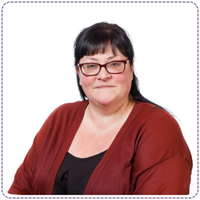
Claire Steele - Adviser, Services For Education
With over 20 years of experience in primary education, Claire Steele is a respected and committed school leader who has worked across a diverse range of schools and multi-academy trusts. Her previous roles include Assistant Principal, Designated Safeguarding Lead (DSL), and Senior Mental Health and Wellbeing Lead. She has also worked extensively with partners to support the delivery of a wide range of National Professional Qualifications (NPQs).
Claire is deeply passionate about creating safe, inclusive, and nurturing school environments, where the wellbeing of pupils is at the heart of practice. She brings her extensive knowledge, dedication, and enthusiasm to Services For Education, supporting schools in embedding effective and compassionate safeguarding practices at every level.
Working as part of our team of advisers, Claire delivers high-quality, comprehensive safeguarding training and conducts thorough safeguarding audits in schools. She also champions SEND and equality, ensuring these values are central to all aspects of her work.